HCL’s Unica suite has been a backbone of enterprise marketing automation for decades. Recently, we sat down with the experts and developers at HCL to dive deeper into Unica Plus (Unica+)—their next big step in evolving the platform. Built with AI, real-time personalization, and flexible deployment options, Unica+ is designed to meet the demands of today’s marketers while protecting the investments existing Unica users have already made.
In this Unica+ FAQ, we share the key takeaways from that conversation: the questions business and technical teams are asking, how Unica+ integrates with current deployments, and what it signals for the future of marketing automation.
The Basics
1. What is Unica Plus?
Unica Plus is the next-generation expansion of the Unica platform. It adds new capabilities for AI assistance, customer data integration, and real-time personalization, while still retaining the proven foundation of Unica Campaign and Interact.
2. How does Unica Plus differ from “classic” Unica?
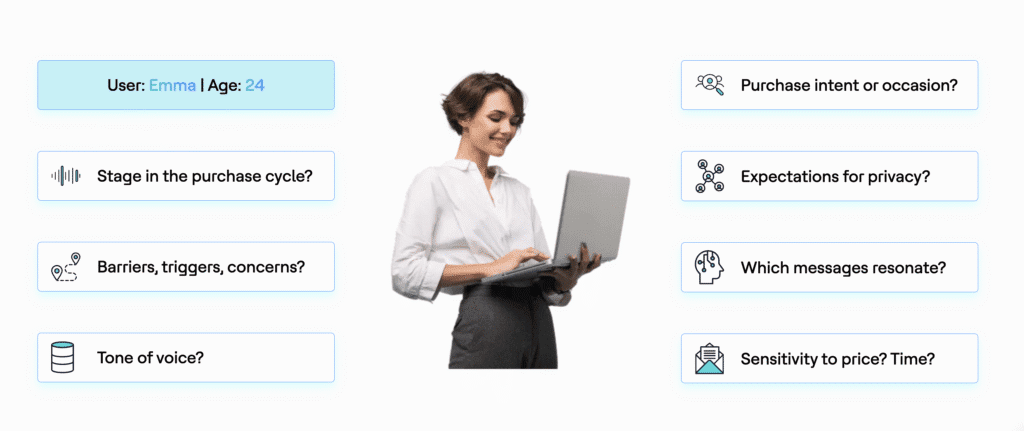
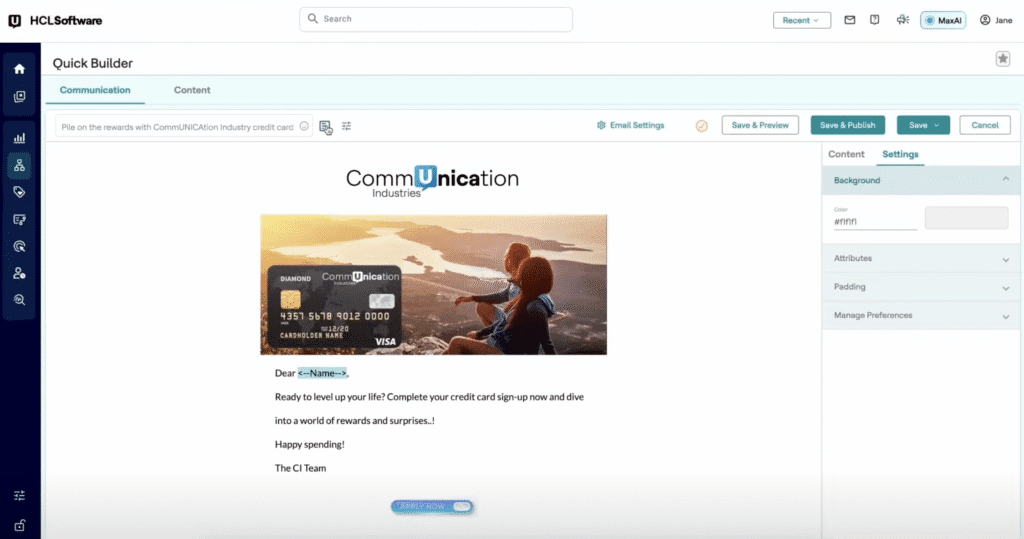
Unica Plus is not a complete engine rewrite. HCL’s existing Unica suite focuses heavily on campaign management and segmentation, often requiring technical expertise to run. With Unica Plus, HCL set out to make the interface easier to use for a wider range of skill levels, while also bringing more strategic tools down into day-to-day execution.
The result is a platform that blends Unica’s traditional campaign strengths with:
- Simplified, marketer-friendly UIs for modules like RTP.
- Customer One View for unified data access, included in CDP tiers.
- AI-driven assistance for optimization and insights — The platform uses built-in AI agents (for example, a Segmentation Agent, Content Optimizer Agent and Insights Agent) to proactively analyze campaign and behavioural data.
- It can identify high-value cross-sell or up-sell opportunities by scoring customers based on past transactions + real-time intent signals.
- It supports churn prediction and retention campaigns by flagging customers at risk and recommending targeted offers.
- It recommends next-best actions (best channel, timing, offer) using predictive modelling and behavioural data (“digital body language”).
- It automates optimization by adjusting content, send-time or offer parameters mid-campaign to boost conversion and ROI.
- Modern deployment options (SaaS, cloud-native, on-prem).
3. Does Unica Plus replace Campaign or Interact?
No — and that’s good news for existing customers.
Unica Campaign has long been the segmentation hub of sophisticated martech stacks, trusted for its ability to handle massive datasets and complex, rules-driven outbound campaigns. That doesn’t change. Campaign continues to manage batch segmentation, but Unica Plus layers on the ability to bring in real-time lead data and event triggers. In practice, this means organizations can keep Campaign as the backbone for structured segments while adding real-time responsiveness — evaluating audiences continuously and taking action the moment customer behavior shifts.
Unica Interact also remains in place as the real-time decisioning engine. What Unica Plus adds is RTP (Real-Time Personalization), a modern interface that sits on top of Interact. The backend logic of Interact still powers the decisions, but marketers no longer need to rely on the more technical, legacy UI. With RTP, they can configure offers, eligibility rules, and channels through a friendlier, marketer-first experience. RTP even generates the Interact objects behind the scenes, while keeping those visible (though not recommended for direct editing) in the classic interface. This replaces a lot of manual work that used to be needed to create these connection points.
In other words, Unica Plus doesn’t replace Campaign or Interact — it extends them. Campaign remains the heavy-duty segmentation engine. Interact remains the runtime brain. Unica Plus adds the connective tissue: real-time event ingestion, AI-guided assistance, and an easier way for marketers to activate personalization across channels without depending entirely on technical teams.
4. What is MaxAI?
MaxAI is Unica’s built-in AI assistant. It can help marketers with troubleshooting, campaign optimization, and workflow navigation.
That said, its usefulness will depend on the maturity of the organization’s execution. For many large enterprises, strategy and execution are already highly structured, meaning Max’s AI assistance may not immediately change how campaigns are run. For smaller or less mature teams, however, MaxAI can provide meaningful guidance and efficiency gains.
CDP and Data Management
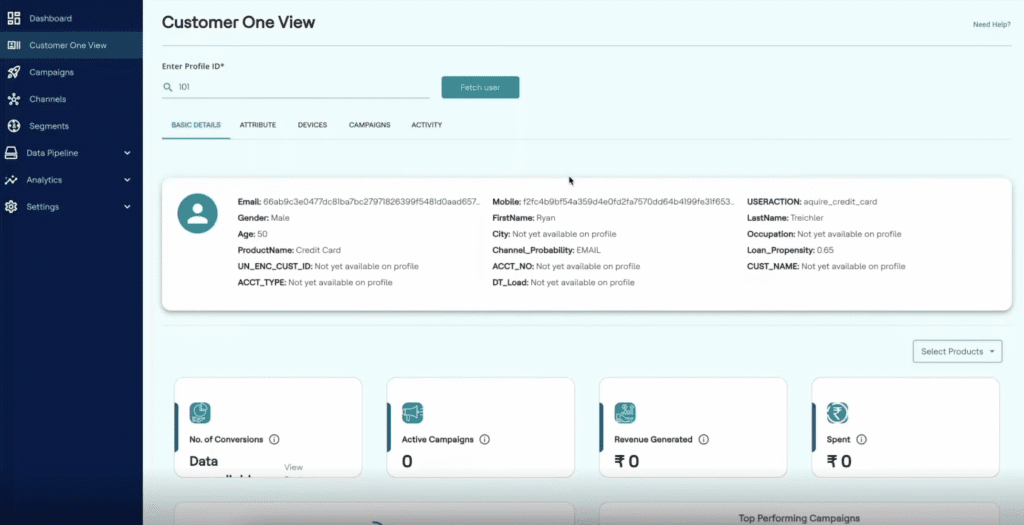
5. What is “Customer One View”?
Customer One View is Unica Plus’s integrated Customer Data Platform (CDP), combining the capabilities of Unica Plus and Discover (formerly Tealeaf). Often referred to as the “platinum package” of Unica Plus, it enables businesses to unify historical Unica data with real-time behavioral insights from Discover. This approach provides a comprehensive, actionable view of the customer without requiring all data to be consolidated into a single repository.
6. Is the CDP mandatory?
No — not always. HCL Unica+ is offered in three bundled tiers: Silver, Gold and Platinum.
- The Silver bundle provides foundational marketing capabilities (segmentation, real-time personalization, journey orchestration) and does not require the embedded CDP.
- The Gold bundle and Platinum bundle both assume the presence of the CDP (governed customer data model, unified profiles) to unlock features like Customer 360 and behavioural analytics.
So, while you can deploy Unica Plus without the CDP (by selecting the Silver tier), the CDP is required for the higher tiers (Gold & Platinum) that deliver the more advanced data-unification and insight features.
7. How does segmentation work in Unica Plus?
Segmentation has always been Unica’s strength, and with the addition of Unica Plus, it becomes more flexible and layered than before. Marketers can define segments from three main sources, each serving different needs:
- Campaign: Still the backbone for large-scale, structured segmentation. Campaign handles complex, rules-driven batch segmentation and is ideal for outbound campaigns such as email blasts, direct mail, or SMS pushes. Many enterprises continue to rely on Campaign for its robustness in handling massive data volumes and detailed business logic.
- Segment Central: Recent updates—including user interface improvements, enhanced AI/ML-driven segment suggestions, and deeper integration—have brought upgraded capabilities to Segment Central, especially in the latest versions that may be included in the Unica Plus platform.
- CDP (Customer One View): Provides real-time segmentation that unifies behavioral and historical data. The CDP can react to events as they happen — for example, identifying “customers who viewed a product in the last 5 minutes” — and make that segment instantly available to drive triggered offers or journey steps.
In practice, most enterprises use a combination of these layers. Campaign manages the heavy lifting for structured, rules-based segments that rarely change. Segment Central ensures those segments are consistently available across all modules. CDP adds agility, enabling marketers to act on signals in real time.
Together, this layered approach allows organizations to balance stability with flexibility — keeping Campaign as the segmentation hub for core operations while layering in CDP and Segment Central for smarter, faster decisioning across channels.
8. Why do CDP projects often fail, and how does Unica Plus address this?
Many CDPs overpromise by presenting themselves as a “magic box” that will instantly unify all data. In reality, CDP projects can fail due to complexity, unclear objectives, and the high cost of consolidating everything at once.
Unica Plus takes a more pragmatic approach. By allowing segmentation to remain distributed — with Campaign, Segment Central, and CDP all contributing — organizations can start small (an MVP) and scale over time. This reduces risk while still delivering meaningful improvements in customer engagement.
Deployment and Technical Considerations
9. What deployment options exist?
Unica Plus offers flexibility:
- On-premises (traditional or Kubernetes-based).
- Cloud-native (private or public cloud).
- SaaS hosting via the HCL Marketing Cloud.
These options let organizations choose the right balance of control, cost, and scalability.
10. What prerequisites are required to upgrade?
The upgrade path depends on whether you are running Unica on-premise or in a cloud-native setup:
- On-Premise Customers: You must first be on Unica 12.1.10 before moving to Unica Plus. This version acts as a baseline requirement, ensuring compatibility with the new modules. From there, you can upgrade to Unica 25.1.0. In other words, if you’re on an older version, you’ll need to take a two-step upgrade:
- Upgrade to 12.1.10
- Then move to 25.1.0 / Unica Plus
Need help getting to baseline? Talk to the Pinpoint team today.
- Cloud-Native Customers: If you’re already running Unica in a containerized, Kubernetes-based environment, you can upgrade directly to 25.1.0, bypassing the intermediate step. This streamlines the path for organizations that have already modernized their infrastructure.
Unica Plus features (like RTP and MaxAI) are Kubernetes-native, so being comfortable with containerized deployment is highly recommended.
The good news: this is not a full “lift-and-shift” migration. Existing Unica customers can continue using their core stack while layering in Plus capabilities. The upgrade is about establishing the right foundation (12.1.10 or 25.1.0) so the new modules can integrate cleanly.
11. What technical skills are required?
Running Unica Plus often requires additional modern stack expertise beyond traditional Unica skills, including Kubernetes, Helm, YAML, Kafka, Redis, and MongoDB. Organizations should plan for training or partner support during adoption.
12. How does Unica Plus integrate with existing databases like Snowflake?
Unica Plus can connect directly to data lakes like Snowflake or to on-premise databases. Unlike some CDPs, it doesn’t require moving all data into its own storage. Sensitive data can remain on-premise, and tokenization or ETL pipelines can be used for SaaS connections.
13. How is sensitive data handled?
PII and other sensitive information can remain within customer-controlled environments. For SaaS deployments, Unica Plus supports tokenization, secure APIs, and compliance measures to minimize risk.
14. How are upgrades managed in Unica Plus?
For containerized deployments, upgrades are delivered through Helm charts and container images. This can reduce upgrade timelines from months to weeks and make it easier to adopt new modules like RTP.
AI and Advanced Features
15. Beyond MaxAI, how else is AI used in Unica Plus?
AI is embedded in multiple parts of the platform, including:
- Flowchart optimization in Campaign.
- Segment recommendations.
- Subject line and creative analysis.
- Insights within journey orchestration.
Importantly, these AI models are not “black box” — they can be tuned and adjusted to fit enterprise needs.
16. What is the Model Workbench?
The Model Workbench is an HCL-developed environment for building and testing AI/ML models that can be used with Unica Plus. It allows data scientists to integrate models with CDP data, generate synthetic data for training, and push scoring models into production.
17. What is Detect?
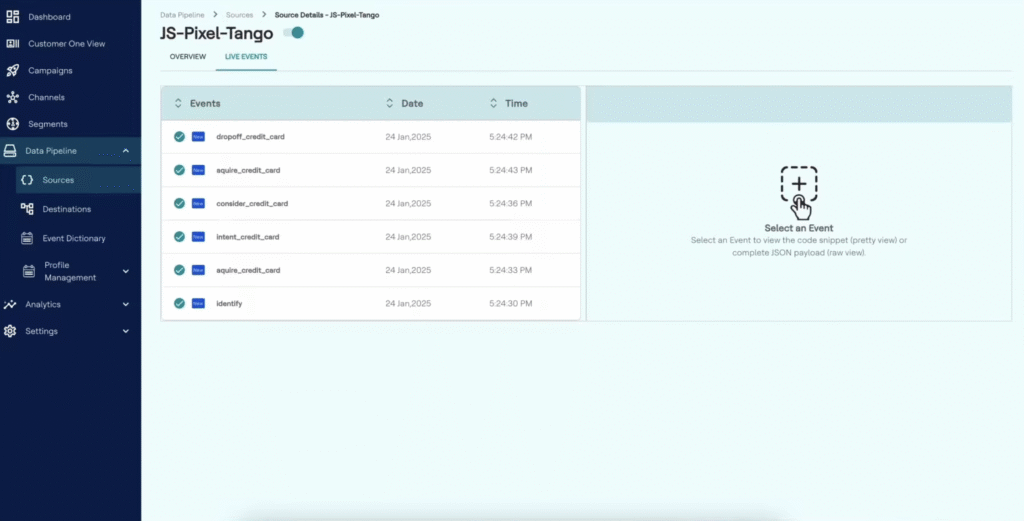
Detect is a real-time event detection engine within Unica Plus. It allows marketers to set up triggers based on customer actions — for example, abandoning a cart — and respond immediately with a personalized offer or message.
The Brass Tacks
Unica Plus is not a replacement for the classic Unica suite, but an extension. It builds on Unica’s core strengths — campaign management and segmentation — while adding usability improvements, AI assistance, and real-time data capabilities. The result is a platform that keeps familiar foundations in place while expanding into new areas of value, offering enterprises a practical way to modernize their martech without starting from scratch.